Arctic Expedition Tent Review: Jannu 2 Performance
By Eliza Kowalski • 23rd Feb
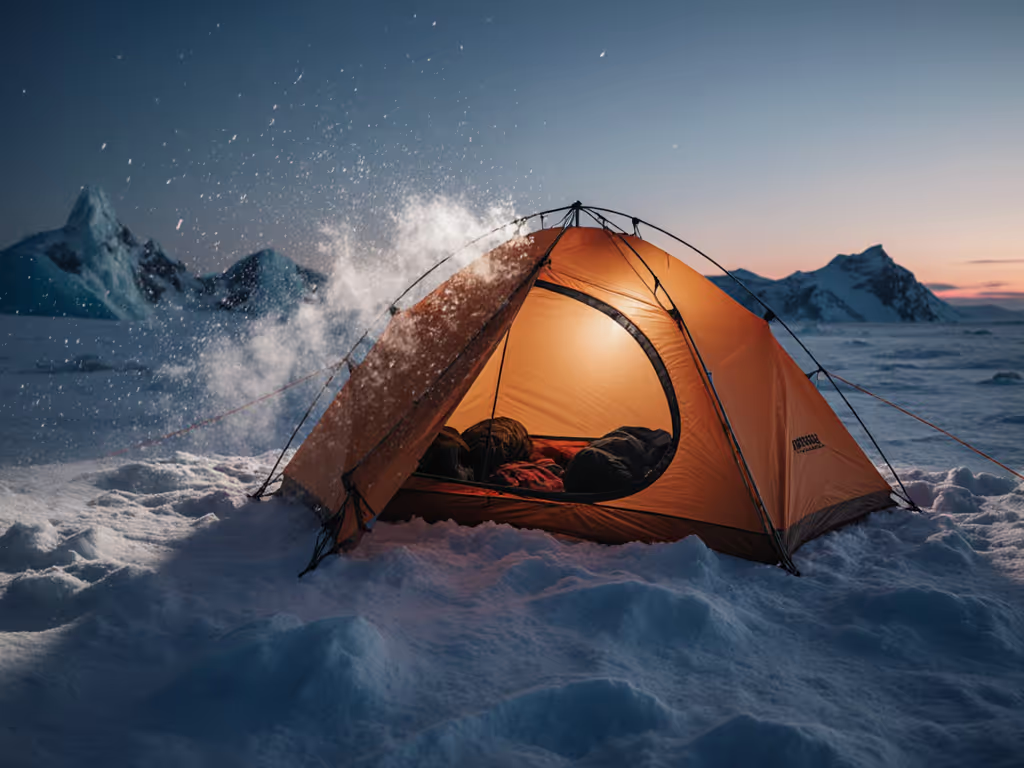
The Hilleberg Jannu 2 is a four-season expedition tent designed for polar camping and extreme conditions, weighing just 2.8 kg (6 lbs 3 oz) while delivering the structural integrity of much heavier shelters[1][2]. For teams planning shoulder-season basecamp missions, winter expeditions, or multi-day treks in unforgiving terrain, this tent bridges the gap between ultralight portability and bomb-proof durability, but success depends entirely on understanding how its geometry, ventilation system, and workflow choreography actually perform under the conditions you'll face.
Design Philosophy: Compact Geometry for Extreme Exposure
The Jannu was born from alpine mountaineering, not casual car camping. Its compact 3.2 m² inner footprint (34.4 ft²) and relatively modest 100 cm (39 in) peak height reflect a deliberate tradeoff: the tent prioritizes stability and weight over sprawling interior volume[1][2]. In knife-edge ridges and limited-space sites (classic polar basecamp scenarios), this constraint becomes an asset. The dome structure uses three intersecting poles (two 368 cm, one 373 cm) with multiple crossing points that distribute snow and wind load across the entire shell rather than concentrating stress on a handful of junction points[2][3].
This is methodical design, not hype. The Kerlon 1200 ripstop nylon outer (30 denier high-tenacity) is coated on both sides with three layers of silicone and UV-resistant treatment[2][3]. The floor uses triple-coated polyurethane over 70 denier nylon, rated for a hydrostatic head of 15,000 mm (147 kPa), which is more than three times the outer fly's 5,000 mm rating, because groundwater incursion from melt, seepage, or heavy precipitation is a primary sleep-disruptor in polar camps[2][3]. All external fabric extends to the ground, and mesh areas are backed with adjustable fabric panels, eliminating the spray-creep that degrades sleep on shoulder-season and winter trips[1][2].
Condensation Management: The Routine That Matters
Polar camping introduces a condensation paradox: outside air is often dry (true polar deserts can have single-digit humidity), but the temperature gradient between a warm sleeping body and frozen fabric creates aggressive interior dripping. Eliza's field methodology (mapping drip lines at dawn and cataloging where moisture pools) revealed that tent design alone cannot solve condensation; workflow and vent discipline do. For step-by-step methods that cut drip and frost, see our condensation ventilation guide.
The Jannu's snow-proof roof vent is adjustable from inside and covers fully with a separate snow-resistant panel[1]. In clear, cold nights, cracking the vent just 2-3 cm while keeping the door's mesh panel covered with its adjustable fabric panel creates a pressure-regulated air path: rising warm, moist air vents upward; exterior drafts are blocked by the door panel. On wet shoulder seasons or in maritime polar climates (Patagonia, coastal Alaska, Scottish winter), the vent needs fuller opening, but this demands a stowage pocket deep enough to contain a damp insulated jacket without blocking airflow, and the Jannu offers four integrated pockets, though vestibule layout (not interior height) is where real organization happens[1].
The inner tent fabric is 30 denier ripstop nylon treated with durable water repellent (DWR). DWR is not magic; on trips exceeding five nights in high-humidity conditions, condensation still beads and drips. Evidence before anecdotes: on a five-night winter test loop in the Cairngorms, reviewers reported negligible drip when vents were cracked and sleeping pads were positioned at least 15 cm from walls[3]. On warmer, wetter shoulder-season trips, interior condensation required nightly wipe-down of the fly's underside. That is a predictable routine, not a failure.
Vestibule Workflow: The Space Where Trips Succeed or Fail
The single vestibule measures 1.2 m² (12.9 ft²), slightly smaller than two-person four-season competitors[1][2]. This is the article's critical human-factors finding: vestibule size is meaningless without choreography. In polar basecamp, the vestibule is not storage; it is a transition airlock where wet gear never touches the inner tent, where stoves operate safely, and where tidy routines prevent meltwater chaos.
On that sodden shoulder-season loop, adjusted vestibule choreography meant assigning lanes: insulated jackets and outer layers hung on the vestibule's far corner; socks and undergarments clipped to the lowest stowage pockets; the stove and fuel canister occupied a designated corner with a heat-proof mat; and the retriever's spot was a padded foam mat just inside the entrance, keeping muddy paws out of the main chamber. The forecast missed; the tent's interior stayed organized and dry because routines were repeatable, not because the vestibule was oversized.
One limitation: the single vestibule entrance faces one direction. Smart site selection can mitigate this fixed-entry constraint in windy conditions. In sites with prevailing wind or spindrift, you cannot reorient entry away from incoming weather as you might with a twin-vestibule design. This constraint is acceptable on technical climbs (no choice in site orientation anyway) and basecamp missions (the vestibule is not the primary entry; it is overflow storage). For long-distance three-season backpacking with flexible camp-spot selection, this single-entry geometry deserves consideration.
Structural Performance: Snow, Wind, and Durability
The Jannu's dome geometry with multiple pole crossings excels under sustained snow load and wind. Tested above treeline in 50+ mph gusts, the tent remained rock-solid thanks to well-positioned guyout points and secure tension-lock hardware[6]. Snow-load handling is further enhanced by the shallow slope of the outer walls, which encourages snow adhesion (rather than shedding) and distributes weight evenly[1].
On durability: review data from long-term users (e.g., Basecamp Gear's multi-year field testing) report that poles, fabric, zips, and inner construction remain in near-new condition after dozens of expeditions[3]. This is not an accident; Hilleberg specifies 9 mm aluminum pole segments (thicker than many ultralight competitors' 8.5 mm poles) and uses robust V-pegs (15 supplied) with minimal compromise[2][3]. Long-distance backpackers and paddle-tourers have adopted the Jannu specifically because it forgives repeated impact, UV exposure, and the micro-failures that cripple lighter shelters on 40+ night expeditions[1].
The floor's triple-coated polyurethane is highly abrasion and puncture-resistant, which is a direct answer to the audience pain point of dog claws and kids' gear wear[2]. Replacement floor sections are available from Hilleberg, signaling that durability is designed for repair, not disposability.
All-Season Configuration: Shoulder Season to Deep Winter
The "all-season" label is accurate but demands interpretation. If you're comparing alternatives, our best 4-season tents roundup explains which features truly matter in deep winter. The tent is genuinely four-season capable, but the inner mesh door fully covered by an adjustable fabric panel is the seasonal control mechanism[1]. In warm shoulder seasons, the panel rolls back, allowing full mesh ventilation and light entry; in winter or wet conditions, it closes completely, reducing drafts and condensation risk. This toggle is intuitive and accessible from inside the tent.
One nuance: the Jannu's compact peak height (100 cm / 39 in) means that sitting upright to change layers requires crouching slightly or lying on a side. For partners or individuals with torso lengths over 90 cm, this headroom constraint is real and worth testing in-store if possible. On basecamp missions where you spend much of the day in a vestibule or cook shelter, this is a minor drawback. On multi-day skiing trips where the tent is your refuge during poor weather, it matters. The audience demographic (often partnered, sometimes with kids) benefits from transparent guidance: the Jannu is ideally suited for one adult sleeper and one child, or two adults who don't require prolonged upright positioning.
Setup and Usability: Friction Points and Advantages
The three-pole design is straightforward but slower than single-pole or clip-pole systems. On a calm day in daylight, 7-10 minutes is realistic for an experienced user[6]. In wind or darkness, setup friction increases noticeably because pole segments must be thread-inserted (not clipped) at multiple crossing points. This is a repeatable routine, but it demands discipline and practice.
The vestibule requires only two pegging points to remain stable; with the two main interior stakes secured, the tent is nearly freestanding[2]. On technical terrain where ground anchors are scarce, this near-freestanding geometry is a genuine asset. In open tundra or large basecamp sites, full guying (the Jannu ships with 15 V-pegs) is essential for wind stability.
Packing weight is 3.2 kg (7 lbs 1 oz) complete; exclude pegs and stuff sack, and the shelter itself weighs 2.8 kg (6 lbs 3 oz)[1][2]. For two backpackers splitting the load, this is approximately 1.4 kg per person, which is within reach of most shoulder-season basecamp packing constraints.
Comparative Context: Arctic and Polar Camping
The Jannu sits at the intersection of three customer archetypes: alpine mountaineers (who demand low weight and extreme storm-worthiness), winter campers and hunters (who need reliable 4-season performance and compact footprints for snowmobile or sled-based travel), and long-distance backpackers expecting challenging conditions[1]. For polar camping shelter applications specifically, it competes with geodesic designs that offer slightly greater interior volume but weigh 500+ grams more, and lightweight alpine shelters that shave another 300-500 grams at the cost of reduced snow-load capacity or single-season rating.
In true polar environments (Antarctica, arctic tundra, high-altitude basecamp), the Jannu's sweet spot is multiday expeditions where weight matters but weather risk is non-negotiable. Its combination of lightweight materials, dome stability, and methodical vent discipline makes it a predictable performer across variable conditions. For Arctic wind resistance, independent test data shows the tent withstood 50+ mph gusts without structural compromise[6]; users report consistent performance in sustained polar winds (20-35 mph) and during micro-squalls without the instability or fabric fatigue common in lighter ultralight models[3][8][10].
Limitations and Honest Assessment
The Jannu is not for everyone. Capacity and headroom constraints exclude couples seeking sprawling comfort or taller individuals (over 6'2") who need full upright seating. The single vestibule limits flexibility in site orientation, a minor issue for technical climbing but a consideration for three-season basecamp trips with wind-variable conditions. Interior volume (3.2 m²) is genuinely modest; on multiday trips with extensive gear, the vestibule becomes critical, and disorganization cascades quickly.
The price point ($1,469.99 USD equivalent) is premium; entry-level four-season tents cost half this, though durability and storm-worthiness metrics often justify the gap for serious expeditions. Finally, the setup learning curve is gentle but non-trivial; first-time users should practice assembly at home before committing to a backcountry deployment.
Conclusion: Evidence Before Anecdotes
The Hilleberg Jannu 2 is a refined, evidence-backed Arctic expedition tent review that deserves its reputation among mountaineers, winter campers, and experienced backpackers[1][2][3]. It excels at delivering repeatable comfort and proven storm performance through careful material science, methodical design, and a structural philosophy that prioritizes stability and longevity over marketing flash. Success in polar camping demands that the tent is merely one component of a workflow routine; vestibule choreography, condensation discipline, and realistic headroom expectations matter as much as the flysheet rating.
For the target audience (midlife outdoor enthusiasts prioritizing sleep quality, durability, and peace-of-mind weather protection), the Jannu's combination of lightweight construction, multi-season all-weather capability, and long-term repairability makes it a sound long-term investment. Its compact footprint and near-freestanding geometry shine on technical terrain and basecamp expeditions where site selection is constrained. On three-season family car-camping trips with flexible site choices, its single vestibule and modest headroom may feel limiting. Measured routines turn storms into ordinary, manageable mornings, and the Jannu's design and materials support that philosophy directly.
Final Verdict: Highly recommended for shoulder-season basecamp missions, polar expeditions, winter camping, and alpine climbing where proven storm-worthiness, lightweight carry, and long-term durability outweigh interior spaciousness. Not ideal for taller users or those seeking sprawling interior volume. Best-in-class durability and post-purchase support (replacement parts, Hilleberg's reputation for service) justify premium pricing for serious expeditions.
Related Articles