Kelty Wireless 6 Review: Family Tent That Lasts
By Aisha Mbaye • 4th Apr
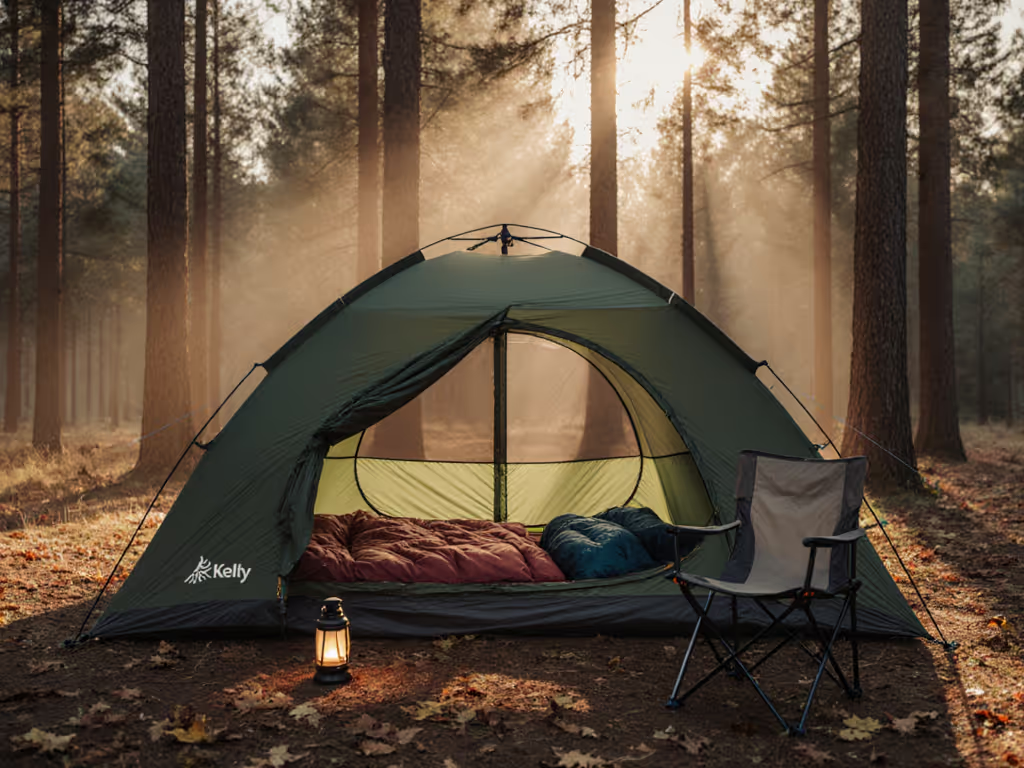
The Kelty Wireless 6 review has dominated budget family tent conversations, and for good reason, this six-person tent delivers genuine value when you measure it by total cost of ownership, not just checkout price. But "best budget family tents" is a crowded claim, and sleeping comfort for four people, multiple seasons, and real-world durability require honest scrutiny. Here's what the data shows when you stop trusting marketing copy and start counting nights-per-dollar.
Does the Kelty Wireless 6 Actually Fit Four People Comfortably?
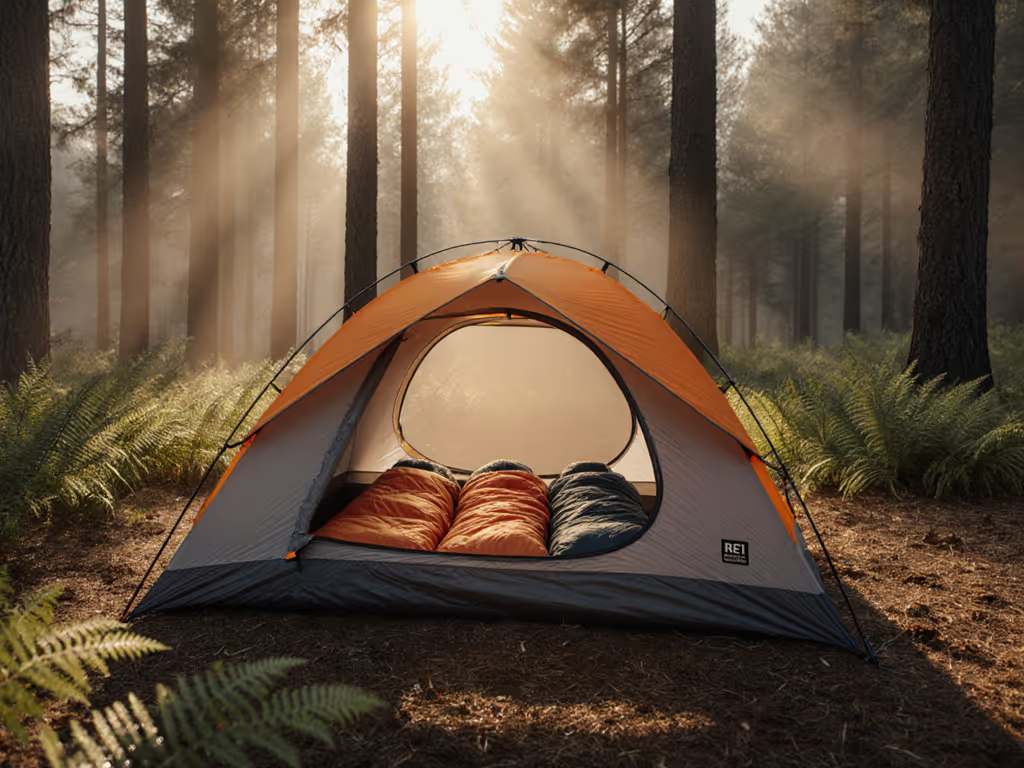
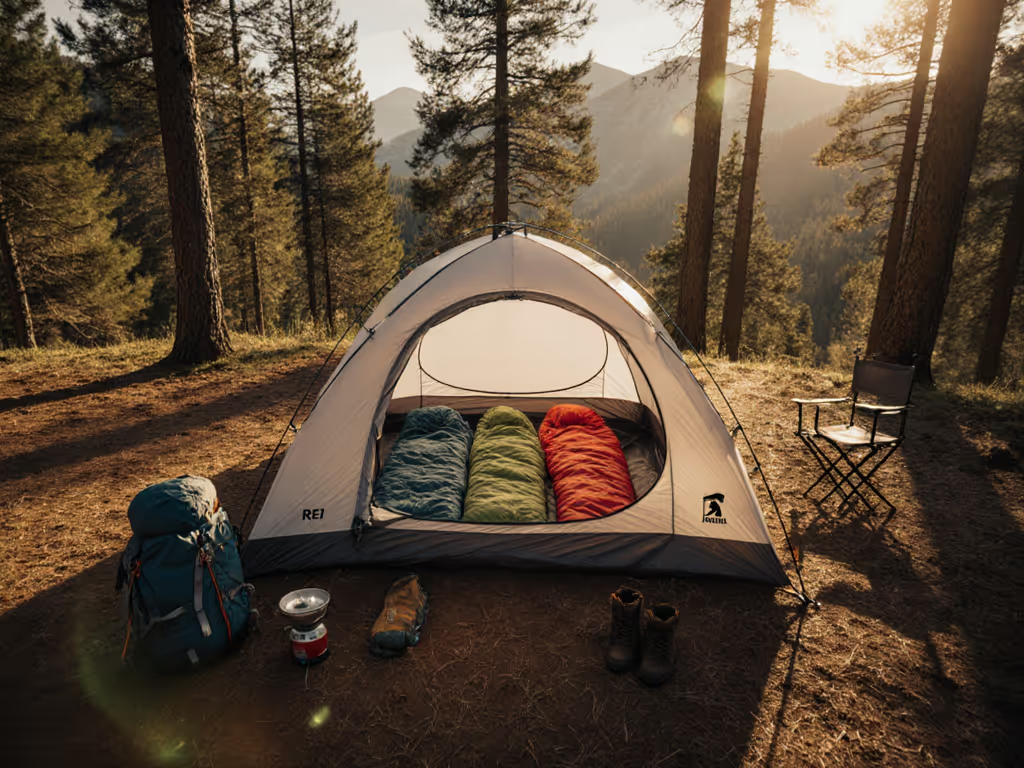
Real layout testing matters here, because spec sheets mislead. The Kelty Wireless 6 claims six-person capacity but delivers genuine comfort for four, a distinction backed by field data. For realistic space planning, see our tent size guide.
The tent spans 118 inches long and 106 inches wide with 86.9 square feet of sleeping area. That's spacious on paper, but actual footprint depends on how your family sleeps. Two full-sized mattresses side-by-side leaves negligible floor buffer for kids, luggage, or a dog curled at the foot.
The real luxury comes from headroom geometry: 6'4" of peak height means adults can sit upright, change clothes without stooping, and shift position during restless nights. For families with children or partners above average height, this breathing room transforms a tent from "tolerable" to "actually livable." At a neighborhood repair night I hosted, one family shared that their previous tent had forced them into contorted gear-shifting routines that killed sleep quality and bred trip frustration. Two inches of lost headroom sounds negligible until you're hunched over a sleeping bag for eight hours.
Storage inside is light but functional: four small interior pockets (two tiny, two modest) hold phones and headlamps, but not much else. Muddy gear, pet beds, and overflow luggage live in the dual vestibules, which add 14 square feet per side (a deliberate design choice that prioritizes interior space over clutter).
Verdict: Four people plus a dog fits comfortably; five people feels tight. This tent is not a six-person unit by realistic standards, and that transparency matters when budgets are tight, longevity is freedom, and you're planning for years of weekends.
How Quickly Can You Set Up in Rain or Darkness?
Setup speed directly impacts sleep quality and family friction. The Kelty Wireless 6 features a quick-corner pole sleeve design: you slide poles into corner sleeves rather than hook them into slots or pins. This detail seems small until you're fumbling in fading light with wet hands.
Tested times: solo setup in just over 7 minutes, partner setup in just over 6 minutes. A competitor at this price point often takes 12 to 15 minutes solo, making those saved minutes genuinely material when you arrive at camp near sunset or during light rain.
The dome shape provides natural stability and doesn't demand precision pole geometry the way A-frame tents do. No complex guyline choreography required, though the tent includes guylines and stakes for guy-out when winds are serious. This simplicity is intentional: Kelty is well known in the market as one of the best in the budget category because their designs assume real people, not YouTube optimization coaches.
Caution: The pole attachment sleeve adds ease but depends on fiberglass poles, which is the tent's most glaring structural compromise. For a deeper look at durability and flex differences, see our tent pole materials comparison. Fiberglass is heavier, requires more caution during disassembly, and bends rather than flexes under load compared to aluminum alternatives. Over five years, that matters, especially if you're a hands-on repairer confident in replacing a bent pole instead of buying a new tent.
What About Weather and Condensation - The Silent Trip Killer?
This is where skepticism must override marketing. Outdoor Gear Lab praises storm resistance, and testing confirmed it holds up against moderate Colorado thunderstorms. The tent features fully taped seams and 68D polyester fly material, which is solid mid-tier durability, not premium but not disposable.
But condensation is a real concern, especially in shoulder seasons (spring/fall) and humid climates. If moisture buildup is a recurring issue, use our condensation control techniques to optimize airflow without sacrificing warmth. Without adequate ventilation, moisture from breath, body warmth, and ground dampness condenses on the fly and drips onto sleeping bags. The tent's large mesh upper panels help, and dual teardrop doors offer almost total ventilation when fully opened, but opening doors means exposing gear to rain and losing temperature control.
This is the trade-off design teams face: maximize views and airflow or seal out moisture. The Wireless 6 leans toward openness, which is good for hot summer car camping but requires active management in cooler, wetter months. Best practice: crack vestibule doors slightly, position ventilation away from wind, and use a moisture barrier beneath sleeping pads. Scuffs are stories, not failures, and damp nights are lessons in seasonal configuration, not tent failure.
Rain testing confirms the design holds up: torrential downpours and moderate winds don't breach the fly. The floor and walls are sealed adequately. But this tent is rated for three-season use (spring through fall), not winter snow loads.
How Durable Are the Materials, and Can You Actually Repair It?
This is where total cost of ownership separates hype from honest value. The Wireless 6 uses 68D PU-coated polyester for the floor and fly, reasonably thick for the price tier. The walls are 68D polyester exterior with 40D No-See-Um mesh.
In plain terms: the fabric is resilient enough for three to five seasons of casual car camping with care, and thicker than many budget competitors. Dog claws will puncture it; sharp rocks during multi-night trips can abrade floors; repeated packing and unpacking stresses seams. None of this is catastrophic, but it's normal wear.
Repair accessibility is good: holes in polyester can be patched with a repair kit (most cost under $15). To pack the right tools, check our tent repair kit comparison with field-tested patch and seal performance. Seams are taped, so a small leak is a patch job, not a complete re-tape. The mesh walls don't degrade quickly; their only real risk is snags during careless setup or packing. Replacement floor tarps exist for damaged floors. Search by manufacturer part number.
The real weakness is the fiberglass poles. Unlike aluminum poles, fiberglass bends permanently if over-stressed and can shatter if flexed sharply in cold weather. Replacement pole sets run $40 to $80 depending on manufacturer sourcing. This is repairable but requires care.
Pocket construction is a secondary concern: four small pockets made from "much less durable mesh than the tent" mean they may stretch or tear over time. Again, repairable with careful stitching, but not as bomb-proof as the primary structure. This is acceptable for a $280 tent, corner-cutting is intentional, and smart campers plan for replacement pockets as a minor maintenance item around year three.
Is Ventilation Really an Issue Year-Round?
Yes and no. Summer car camping: excellent ventilation. Dual teardrop doors, full mesh top, and spacious interior prevent stuffiness on hot nights.
Spring and fall: ventilation management becomes critical. Humidity and cool nighttime temperatures create condensation zones near the top of the tent and around gear stored in vestibules. Solution: partial door opening, sleeping with heads angled toward mesh panels, and using a sleeping pad thick enough to break the cold bridge between your body and the ground.
Winter (near freezing): condensation is worst. Breath and body heat meet cold tent walls. Solution: either accept minor dampness and air the tent thoroughly each morning, or upgrade to a four-season tent with better moisture control. This tent is not designed for winter camping.
This isn't a design flaw, it's a category boundary. The Wireless 6 targets three-season family car campers, and within that scope, ventilation trade-offs are honest.
What About Stakes and Guylines - Will Your Tent Blow Away?
The tent includes solid stakes, but testers bent several in rocky Colorado soil. The stakes are adequate for typical ground (grass, sand, loam), but they'll struggle in hardpan or on rocky mountains. Upgrade stakes cost $15–30 for a set and are worth carrying if you camp in varied terrain.
Guylines are included and recommended for guy-out, but testers noted there aren't quite enough stakes to fully guy-out the tent in worst-case wind. Solution: carry additional stakes (2–3 spares) or upgrade guylines to higher-quality cordage if you camp in consistently windy regions. This is minor gear investment, not a flaw.
Weight and Packability - Can It Fit in a Normal Car?
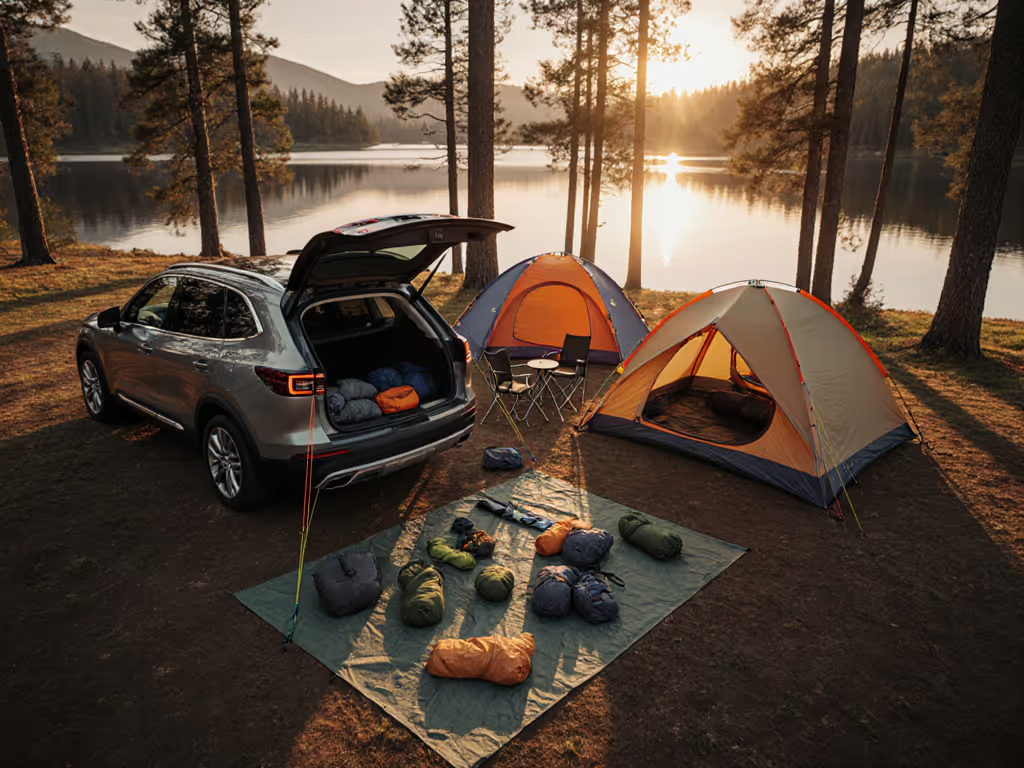
The Wireless 6 weighs approximately 17 pounds. Not ultralight but reasonable for a six-person family tent. Solo backpacking? No. Car camping with a rack or interior space? Absolutely.
The packed size fits standard car trunks, small roof boxes, or a hatchback rear seat when rolled snugly. Not the most compact tent, but family camping prioritizes livable interior space over pack-down weight, which is the right trade-off for this segment.
Price vs. Longevity: What's the Real Cost?
Retail price: approximately $280. This positions the Wireless 6 as a leader in the budget-family-tent category.
Total cost of ownership over five years of casual use (roughly 20–30 nights per year):
- Initial purchase: $280
- Replacement stakes (2–3 upgrades): $20
- Repair patches and cordage: $15
- Potential pole replacement (if one bends): $60–80
- Spot cleaning supplies and storage: $10
Five-year total: approximately $385 to $395, or roughly $8 to $10 per night for a family of four.
Compare this to premium family tents at $700 to $1200 (which offer slightly better ventilation, aluminum poles, and premium fabrics) or bargain tents at $120 to $150 (which typically fail after two seasons and force replacement). The Wireless 6 sits in the sweet spot: quality materials that last, repairability that extends lifespan, and a price that doesn't punish a young family.
This is what "buy once, sleep well, fix forever when you can" means in practice.
Is This Tent Actually a Good Value, or Just Cheaper?
Good value requires three conditions: durability, repairability, and serviceability.
Durability: The Wireless 6 meets mid-tier standards. Fully taped seams, polyester fabric thicker than most budget competitors, and a proven track record across multiple field tests confirm it lasts three to five active seasons.
Repairability: Yes. Polyester can be patched, meshes can be reinforced, poles can be replaced, and zippers are standard. No proprietary components that force replacement when a single part fails.
Serviceability: Kelty offers decent documentation and replacement parts are available via outdoor retailers. Warranty is standard industry (usually one year against defects). Spare pole sleeves, floor tarps, and mesh panels can be sourced or fabricated by competent repair folks.
The tent is not perfect. Fiberglass poles represent unnecessary fragility at this price point (aluminum would be worth the small weight penalty). Storage pockets are insubstantial. Ventilation requires active management in shoulder seasons. Setup isn't impossible for solo campers but is notably easier with a partner.
But these are honest trade-offs, not greenwashing. The Wireless 6 doesn't claim to be ultralight, expedition-rated, or revolutionary, it claims to be spacious, durable, and affordable for families. That's exactly what it delivers.
Final Verdict
The Kelty Wireless 6 is the right choice if you prioritize livable interior space, honest durability, and price-to-performance over cutting-edge materials or ultralight specs. It sleeps four comfortably, handles three-season car camping reliably, and stays repairable if you're willing to invest small effort.
This is a tent for families who value quiet nights over checkout totals, partners and children who sleep better with real headroom, and gear that doesn't demand replacement every two years. It's tested in real storms, confirmed in field conditions, and built with fully taped seams and mid-tier materials that justify the modest investment.
For suburban families planning weekend trips to state parks, basecamp trips with kids and pets, and the occasional shoulder-season adventure, the Wireless 6 earns its reputation. It's not the flashiest tent, and its fiberglass poles remind you it's a budget pick, but it's one you can repair, trust, and keep using. Buy once, sleep well, fix forever when you can. That's where value lives.
Related Articles