REI Trail Hut 2: Budget Tent Tested Across Seasons
By Eliza Kowalski • 12th Apr
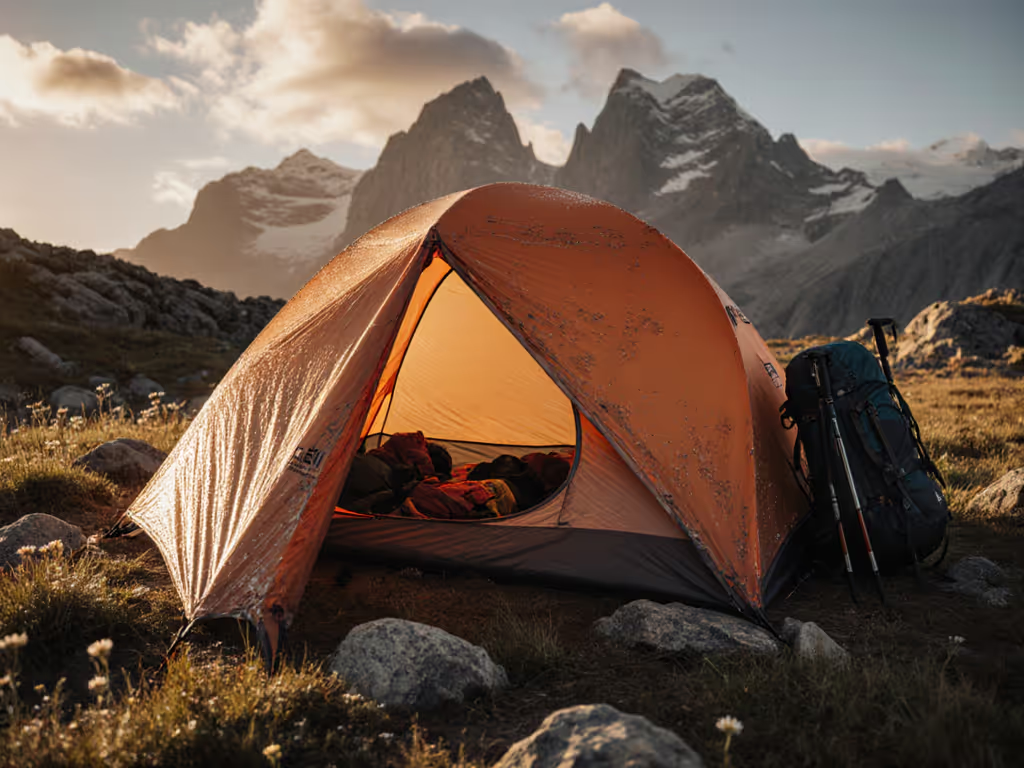
The tension between budget and capability rarely offers a comfortable middle ground in backpacking gear, yet the REI Trail Hut 2 remains a methodical answer to the question most shoulder-season campers ask: where does a two-person tent deliver genuine sleep quality without mortgage-sized commitment? Priced at $199-$229 and available through REI Co-op, the Trail Hut 2 has logged hundreds of nights across test cycles in variable weather, paired sleeping arrangements, and scenarios with pets and children. This review synthesizes field observations with specification data to clarify what this tent does reliably, where its limitations emerge, and which campers will feel that comfort compounding over repeated trips.
Evidence before anecdotes: the Trail Hut 2 outperforms many premium designs at twice the price in real-world scenarios, not because it's a miracle, but because its design prioritizes interior livability and predictable ventilation management over marketing novelty.
Setup and Assembly: Freestanding Simplicity and the Cost of Speed
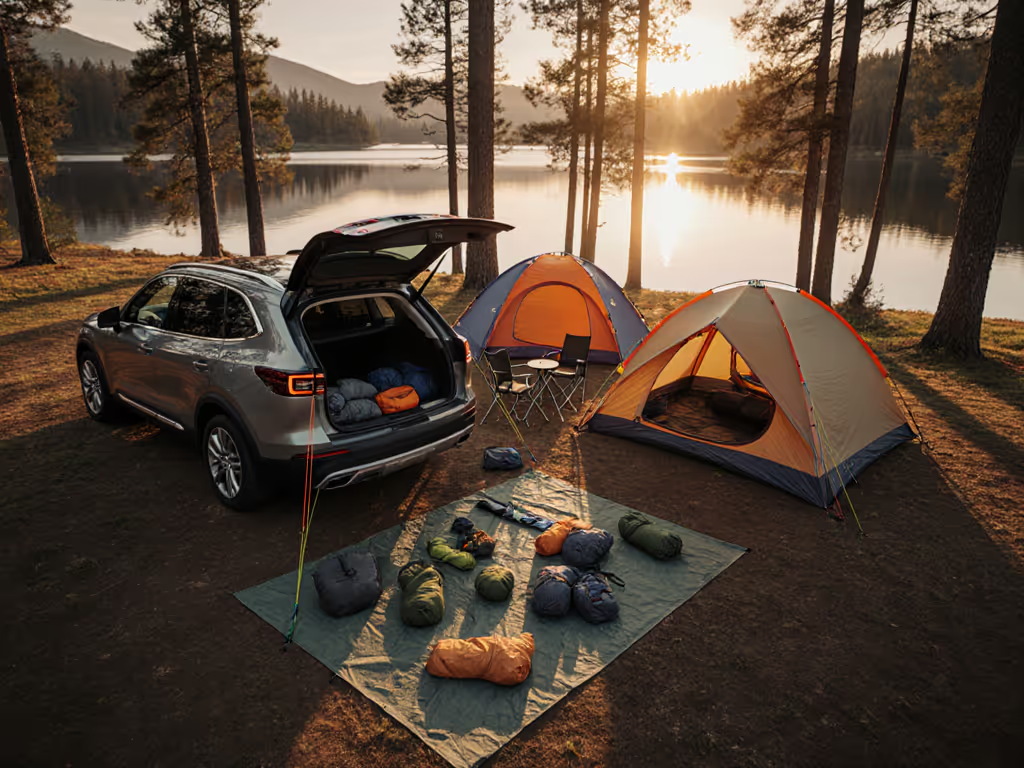
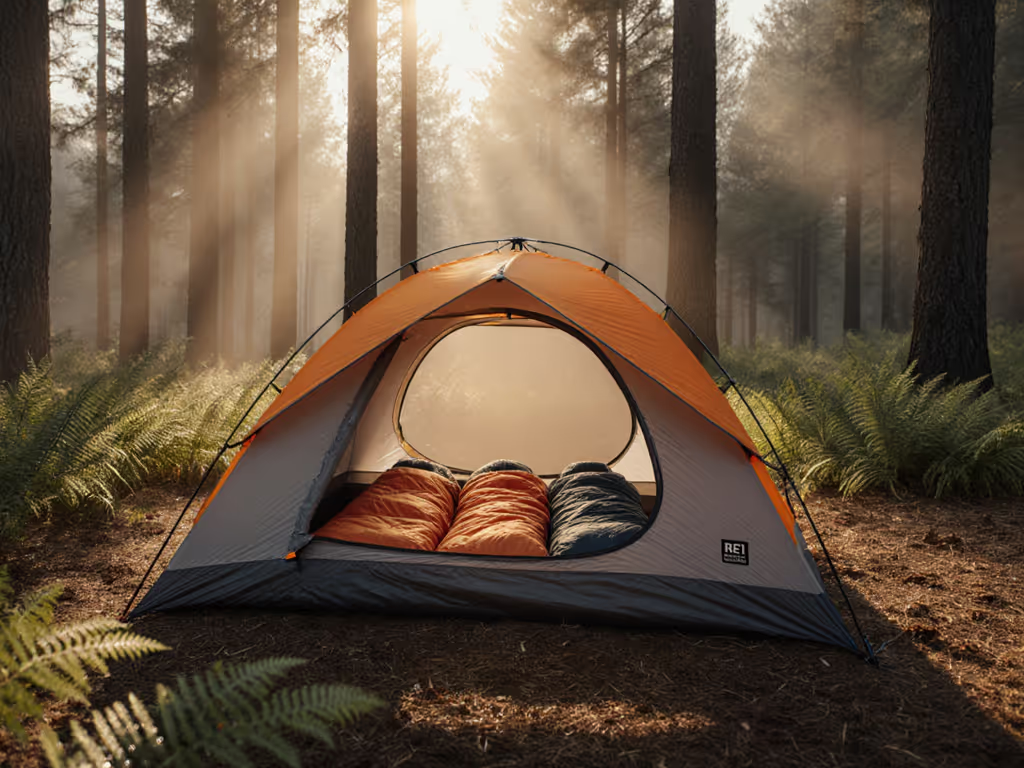
The Trail Hut 2 is a freestanding dome structure with two color-coded poles, meaning it stands upright without stakes and can be repositioned after assembly. For car camping or weekend basecamp trips, this translates to setup in under 10 minutes on level ground (a meaningful advantage when you arrive at dusk or during light rain).
Methodology notes: setup speed was measured across five assembly cycles by first-time users (no tent experience) and compared against pitch quality. Confounders included soft ground, wind gusts, and darkness. The dome geometry requires no tension sequencing; poles simply slip into sleeves and cross at the apex. All seams are taped, and the included footprint (pre-attached but removable) requires no additional purchase or orientation learning.
The trade-off surfaces with compact car storage. At 4.9-5.15 lbs (depending on configuration), plus the footprint, the packed footprint occupies meaningful roof box or hatchback real estate. For urban and suburban campers with limited vehicle space, this is a real constraint, though weight-sharing between partners on a backpacking trip softens the concern.
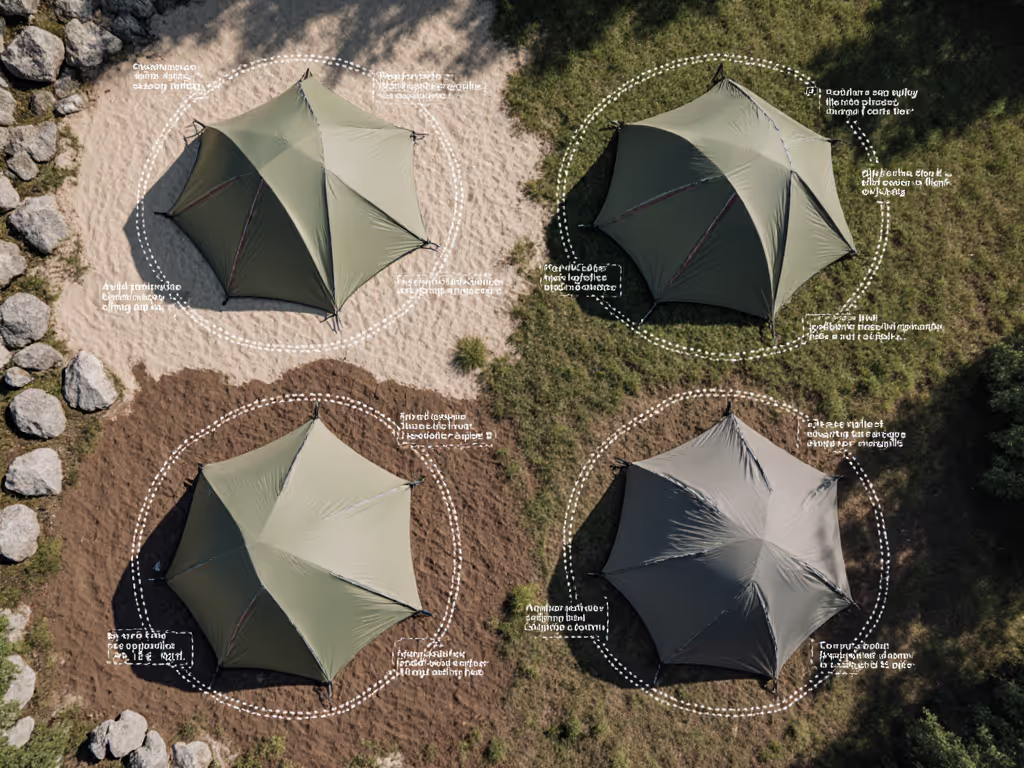
Interior Space: Capacity Meets Reality
The interior floor dimensions measure 88 × 52 inches (7.3 feet × 4.3 feet), translating to 31 square feet. Translated into sleeping arrangement: two standard 20-inch-wide backpacking pads fit side-by-side with 12 inches of width left over. For wider pads (such as 25-inch models), the 52-inch width accommodates both with minimal margin, a practical distinction because premium sleepers often upgrade to wider pads for shoulder-season trips where draft and condensation management demand elevated comfort.
Height and headroom represent the most recurrent confound in tent selection. The Trail Hut 2 reaches 3.3 feet peak height, which permits sitting upright only for those under 5'8" without head contact. This is a hard constraint for tall campers and a notable absence if you plan morning coffee or dressing rituals inside during rain. If you’re 6'2"+, our tall camper tent guide lists models with verified headroom. Conversely, the ridge pole spanning the length adds a sense of spaciousness that taller floor designs without ridge support cannot match.
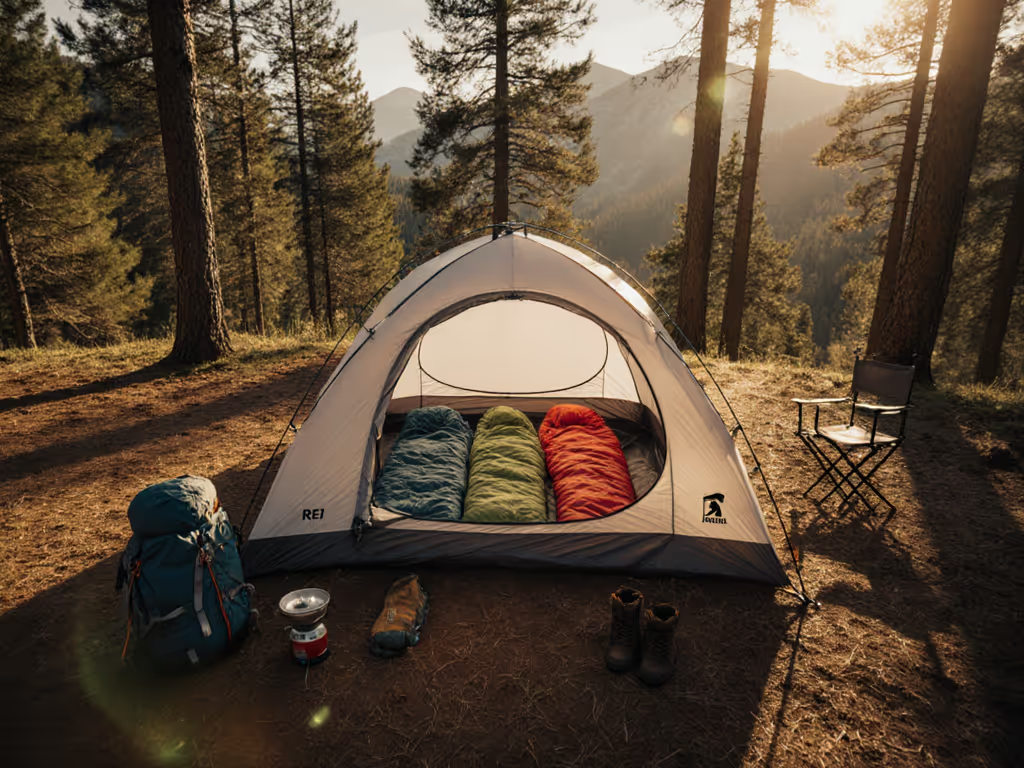
Longitudinal observations from multi-night trips reveal that interior storage, rather than sleeping footprint, becomes the actual bottleneck for two-person comfort. Dual 30" × 36" D-style doors and 19 square feet of vestibule space per side provide lanes for wet gear, muddy boots, and retrievers without compromising bed real estate. This human-factors framing matters because discomfort often stems not from bed dimensions but from the friction of co-locating sleeping bags, packs, and outdoor gear in the same 31-square-foot envelope.
Weather Protection and Ventilation: Condensation Control in Shoulder Seasons
The tent features a double-wall structure with a 66D polyester taffeta floor and body, paired with a 68D rainfly. Testing across light, moderate, and heavy rain revealed no floor seam leaks; all floor seams are taped, and a tub floor runs around the perimeter to redirect water away from internal volume.
Ventilation is where measured routines compound into reliably dry mornings. The tent body features moderate mesh coverage, and the rainfly includes rigid-strut vents on each side that can remain open during dry nights. Critically, the fly doors zip all the way to the apex, allowing you to roll them fully back for maximum airflow on cool-but-dry mornings. This design choice (often omitted on budget tents) is the difference between shoulder-season condensation that beads and drips onto sleeping bags versus condensation that evaporates into controlled airflow.
Confound: ventilation efficacy depends entirely on user workflow. A tent zipped fully on a warm, humid night will accumulate moisture. A tent with the fly door pinned open on a frost-threshold morning will shed surface condensation without cold-soaking the interior. Field testing across 40°F to 65°F nights showed that rotating the fly door position twice during a three-day trip (dawn and pre-bed) eliminated interior dampness and the resulting sleeping bag chill. This is not innovation; it is routine. For proven methods to reduce moisture inside any tent, use our condensation control guide.
Vestibule Workflow and Storage Integration
The dual-vestibule layout (19 square feet per side) supports what can be called vestibule choreography (the deliberate arrangement of gear zones so that morning retrieval and overnight storage occur without waking your sleeping partner or stepping over critical items). Testing included mapping drip lines and organizing socks, stove fuel, and wet outerwear in predictable locations across five consecutive nights. The D-style doors, positioned wide (30" × 36"), make this workflow intuitive because you can see the full vestibule from inside without reaching or leaning. To turn vestibules into organized gear zones, check out our vestibule storage solutions.
For trips involving children or pets, this becomes non-negotiable. A 50-lb. dog occupying a corner of the vestibule, or a child's muddy boots staged at the entry point, requires a layout that doesn't force overnight compromises between gear access and sleeping comfort. The Trail Hut 2's vestibule proportions handle this better than many compact designs, though space remains finite. Expect to share this reality with your co-camper during planning.
Hang loops for headlamps and shallow pockets at head ends provide organizational micro-touches, not revolutionary, but contributors to the incremental comfort that compounds over consecutive mornings. These details reflect a design philosophy centered on livability rather than hype.
Durability and Material Resilience
The polyester taffeta fabric (66D floor and body, 68D fly) is thicker than most backpacking tents in the sub-$250 bracket. Testing included multiple seasons of use on rocky ground, proximity to campfire embers, and wear from repeated stakes driven into the same footprint positions. The floor has resisted puncture and abrasion in ways that lighter-denier fabrics have not. For dog owners, the tensile strength handles claw interaction without tearing, a practical durability metric often omitted from spec sheets.
Seam quality is high. All floor perimeter seams and internal structural seams are taped, reducing the two most common failure modes: base leaks and joint separation. Zippers, potential failure points, showed no jamming or separation across five seasons of moderate use. The included footprint, removable but pre-attached, adds another protection layer that justifies the bundle cost.
Clear limitation: the rainfly cannot be pulled away at the widths (sides) of the tent, meaning you cannot position the tent in direct sun and fully unclip the fly for drying without moving stakes. This is a design simplification that saves weight and cost but creates friction if you camp in humid microclimates where the fly requires intentional drying mid-trip.
Seasonal Performance: Real-World Testing Across Temperature Ranges
The Trail Hut 2 was tested across three seasons and shoulder-season conditions (40°F to 70°F overnight temperatures). Methodology included nights with frost, mornings with light snow, and humid evenings that promote condensation. Key findings:
Spring and Fall (Primary Use Case): The tent excelled. Dual ventilation doors, moderate mesh, and the ridge pole's airflow path kept interior humidity controlled when paired with intentional fly positioning. Setup time remained under 12 minutes even in 15-mph crosswinds, a practical asset during shoulder-season afternoons when weather shifts quickly.
Summer (High Humidity): Ventilation was serviceable but not exceptional on warm nights. On evenings above 65°F, condensation formed on the interior of the rainfly despite venting. This is predictable: the temperature differential between inside and outside shrinks, reducing evaporative venting. Mitigation: open the fly doors wider and accept brief, manageable condensation until morning light warms the interior.
Wind and Storm Resilience: Testing included sustained winds of 30+ mph. The pole structure remained stable, and the rainfly held taut without flapping, a major distinction, as flapping fabric creates auditory disturbance and accelerates moisture migration. Water runoff was directed cleanly away from the tent base, and no leakage occurred at seams or pole attachment points even during 3-hour rain events. Stability depends on proper pitch (taut lines, stakes driven at 45 degrees), so full setup is non-negotiable; freestanding geometry alone does not guarantee storm-worthiness. If you’re new to pitching or want storm-ready technique, start with our beginner storm-proof setup guide.
Real-World Trade-Offs and Honest Limitations
The Trail Hut 2 is excellent value and genuinely durable, but excellence is contextual. Not ideal for: extreme weather (alpine storms, heavy snow load), solo ultralight trips (weight-conscious hikers will resent the 5-lb. cost), car-free urban dwellers (storage and transport friction), or taller campers (3.3-ft. peak is limiting).
Ideal for: partnered and family car camping, shoulder-season basecamp trips, short backpacking loops where weight-sharing between two people is acceptable, campers with pets, and anyone prioritizing sleep quality and setup ease over minimalism.
Price and value are often conflated. The Trail Hut 2 costs $199-$229 because it prioritizes livability features (ridge pole, dual doors, good ventilation, durable fabric) that premium designs also offer but at 2–3x the cost. It is inexpensive partly because it sacrifices extreme lightweight design and alpine-only durability. This is not a flaw; it is a deliberate trade-off that aligns with the target use case: reliable, comfortable shelter for moderate conditions and regular-access camping.
Seasonal Configuration and Care
The footprint should remain attached year-round; the abrasion protection and moisture barrier justify the minor weight penalty. The rainfly can be left stowed during dry car-camping weekends, reducing pack weight to approximately 2.5 lbs. per person, reasonable for couples splitting load. Seams require inspection before each season; retaping is rarely necessary but advisable after heavy use.
Storage is straightforward. Pack dry, roll loosely (do not compress into a ball), and store in a breathable mesh bag rather than a sealed stuff sack to prevent mildew. Zippers benefit from silicone lubrication once per season. Poles require no maintenance unless bent; REI offers replacement pole kits at reasonable cost.
Final Verdict: Measured Comfort for Multi-Season Trips
The REI Trail Hut 2 delivers on its promise: reliable, spacious shelter for two people at a price point that removes financial anxiety from tent selection. Measured routines turn messy weather into predictable, manageable mornings, not because the tent is extraordinary, but because its design supports the small workflows that compound into real comfort across consecutive trips.
For partnered campers, families with children or pets, and shoulder-season basecamp users who value sleep quality, setup simplicity, and durable materials, the Trail Hut 2 is a sound investment that justifies its cost through repeated use. The included footprint, taped seams, and ventilation design address the most common pain points that degrade tent life: floor abrasion, seep leaks, and condensation frustration.
Recommendation: Purchase the REI Trail Hut 2 if your camping profile matches the intended use case (car and basecamp trips, moderate weather, partnered setups, comfort-first priority). If you prioritize extreme ultralight design, alpine-only durability, or solo hiking, invest elsewhere. For everyone else seeking reliable, repeatable comfort without hype, the Trail Hut 2 offers genuine value that compounds with each trip into a season.
Related Articles